Every English-language guide on the internet pits these two brands against each other, and almost none of them mention the one thing that decides the question for anyone reading this from a flat in Europe: only one of them is actually on sale here.
In brief
- PUR belongs to Helen of Troy, which bought it from Procter & Gamble in January 2012.
- Brita in Europe is Brita SE, in Taunusstein, Germany; Clorox holds the brand in the Americas.
- The American Brita Standard filter is not certified for lead. The European MAXTRA PRO range is.
- EU tap water must meet 5 µg/l of lead by January 2036, down from 10.
- 1 Two brands, four companies, and why the reviews contradict each other
- 2 What the filters are certified to remove
- 3 The lead question is being settled by law, slowly
- 4 What nobody tells you about filtering water on the Riviera
- 5 How I would choose, in a Riviera kitchen
- 6 Two questions readers keep sending me
Two brands, four companies, and why the reviews contradict each other
The confusion in almost every Brita versus PUR article comes from the fact that “Brita” names two separate businesses.
Brita was founded in 1966 by Heinz Hankammer in Taunusstein, near Wiesbaden. In 2000 the German company sold the exclusive rights to the brand in North and South America to Clorox, and kept everything else. That is why an American review discussing the Brita Standard, the Brita Elite and their certifications describes a product line that has no exact equivalent in a French supermarket, where you will find MAXTRA+ and MAXTRA PRO instead.
PUR has had a similarly busy history. It came out of a Minneapolis firm, Recovery Engineering, bought by Procter & Gamble in 1999, then sold on to Helen of Troy in January 2012. What it has never really had is a European retail presence. If you live in Nice, Antibes or anywhere else on this coast, buying PUR means importing cartridges indefinitely, which is a miserable way to run a kitchen.
What the filters are certified to remove
Certification, not marketing copy, is the only part of this comparison worth reading closely.
The American standards are NSF/ANSI 42, which covers taste and odour problems such as chlorine, and NSF/ANSI 53, which covers health-related contaminants such as lead and mercury. The distinction matters because the entry-level Brita filter sold in the United States is not certified for lead, while the premium one is, and PUR built its whole pitch on that gap.
| Filter | Sold mainly in | Lead reduction claimed |
|---|---|---|
| Brita Standard | North America | No |
| Brita Elite | North America | Yes |
| Brita MAXTRA PRO | Europe | Yes, alongside copper |
| PUR PLUS pitcher | North America | Yes |
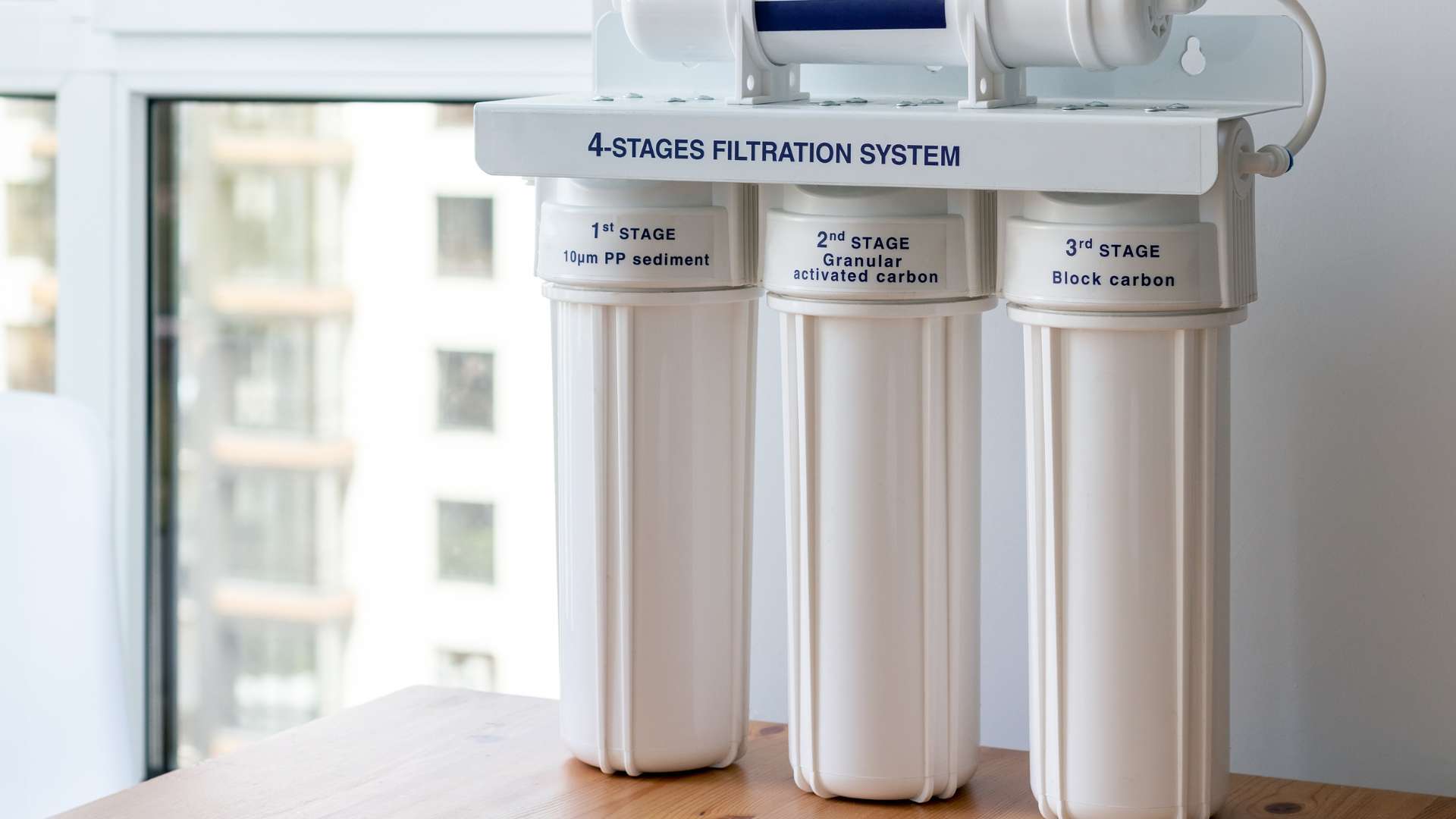
Brita describes the MAXTRA PRO cartridge as combining an ion exchange resin, which reduces carbonate hardness and metals including copper and lead, with activated carbon for chlorine and the taste it carries. The manufacturer rates a cartridge at roughly four weeks or 150 litres. PUR, for its part, advertises more than 70 reduced contaminants on its PLUS pitcher filter. Both are supplier claims, and both are worth checking on the packet rather than in an article, because ranges get reformulated quietly. It also explains why a shopping list copied from an American blog, the Brita Grand pitcher on one line and the PUR Classic on the next, translates into nothing you can put in a trolley in Cagnes-sur-Mer.
The lead question is being settled by law, slowly
The reason lead dominates these comparisons is that the legal limit is moving, and the deadline is a long way off.
Directive (EU) 2020/2184, the recast drinking water directive that member states have had to apply since January 2023, halves the permitted concentration of lead at the tap from 10 µg/l to 5 µg/l, with a transition period running to January 2036. Countries may move earlier, and the work involved is mostly replacing old pipes and fittings rather than anything a household can do.
What that means practically: in a building where the internal plumbing predates the 1960s, a certified cartridge is a reasonable interim measure. In a flat built in 2005 with copper or PEX pipework, it is solving a problem you almost certainly do not have. Your water utility publishes analysis results for your commune, and they cost nothing to read.
What nobody tells you about filtering water on the Riviera
Our real water problem here is not contamination. It is limestone.
Published hardness figures for Nice sit around 24 French degrees, which is firmly in hard water territory, and the Alpes-Maritimes as a whole is a limestone department. You see it before you taste it: the white crust in the kettle, the film on the shower screen, the towels that come out of the machine stiff.
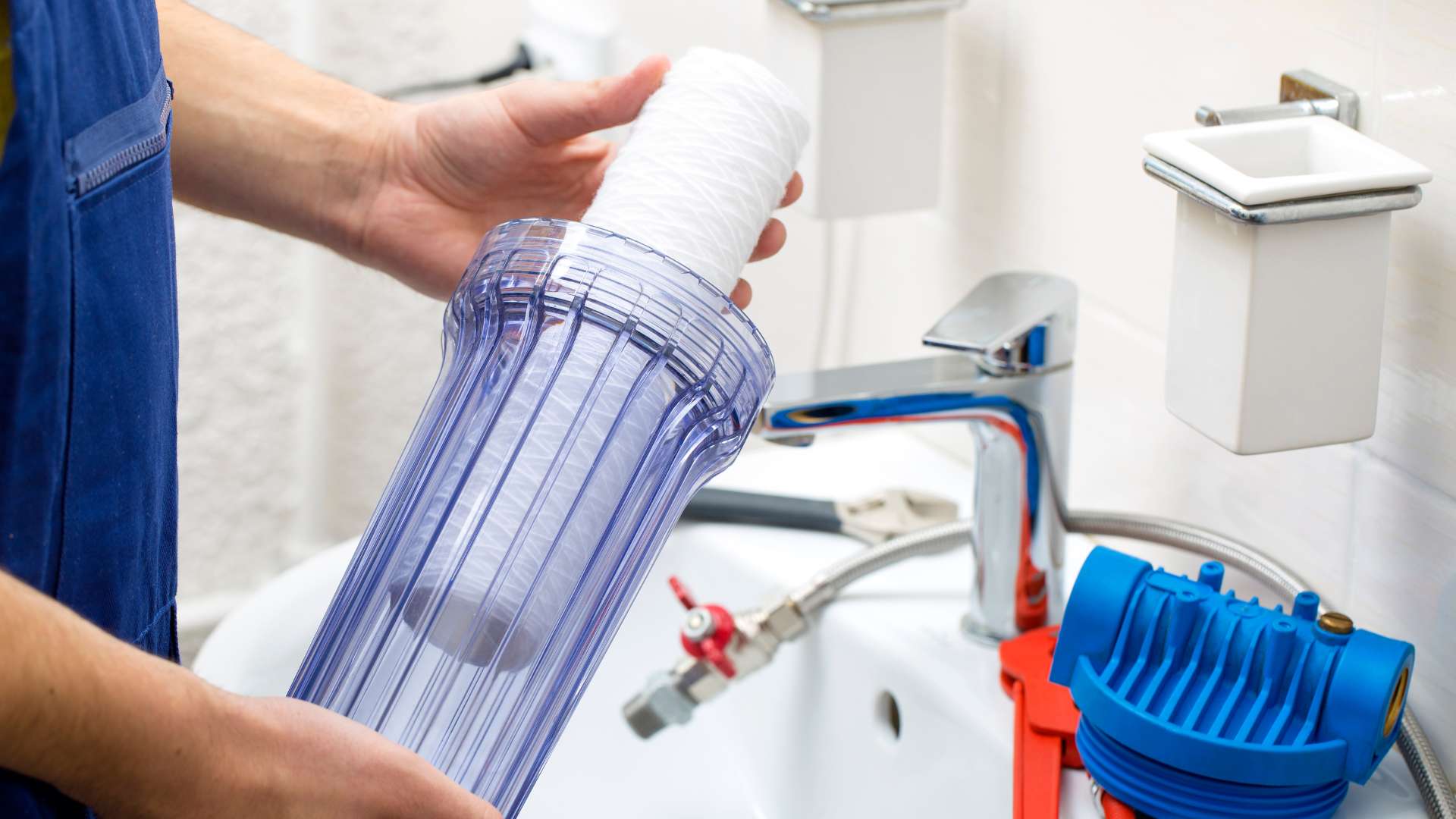
A jug filter does help with this, which is the part the lead-focused reviews skip. The ion exchange resin that captures metals also captures part of the carbonate hardness, the fraction responsible for kettle scale, and Brita sells a Limescale Expert version of the MAXTRA PRO specifically formulated to do more of it. What a jug will not do is protect your washing machine, your boiler or your shower head, because it only treats the two litres you pour into it. If limescale is what actually irritates you, the money belongs in a treatment unit on the incoming supply, not in cartridges.
How I would choose, in a Riviera kitchen
The decision comes down to three questions, and the brand name is not one of them.
- Where will you buy the cartridges in three years? A filtration system is a subscription in disguise. Pick a range stocked in the supermarket at the end of your street.
- What is actually in your water? Read your commune’s analysis first. Chlorine taste and hardness call for a different cartridge than metals do.
- Jug or tap mount? A jug is portable and refills slowly. A faucet mount gives continuous filtered water but needs a compatible thread, which older French mixers frequently do not have.
One habit worth more than any brand comparison: change the cartridge on time. A saturated filter stops being neutral and starts being a warm, wet surface with a large surface area, which is not what you want between your tap and your glass. If the jug lives on a sunny counter in August, and on this coast it will, keep it in the fridge instead.
Two questions readers keep sending me
Does a filter jug soften water enough to protect appliances?
No. It treats only the volume you pour through it, so it can improve the water in your kettle if you fill the kettle from the jug, and it does nothing for the machines plumbed into the mains. Whole-house softening is a separate purchase with a separate budget, and one worth planning alongside any bathroom renovation done on a budget rather than bolted on afterwards.
Is filtered water safer than French tap water?
Tap water in France is one of the most monitored food products there is, and the honest answer is that most people filter for taste, not safety. A certified cartridge is a sensible precaution in old buildings with unknown internal plumbing. It is not a substitute for having the pipework checked, and if you have a real doubt about lead, ask for a test rather than buying a jug and hoping.
Equipping a connected kitchen?
The same question about who really supports the product in Europe decides more than the feature list does.