A friend hung a beautiful rattan shade over her dining table in Vieux Nice last spring and spent an entire evening choosing the bulb. What almost sank the project was not the bulb at all. It was the twenty centimetres of ceiling above it, and the fact that nobody had looked up there first.
In brief
- A DCL ceiling box is designed for a luminaire of 25 kg maximum.
- IKEA announced its 21-product Matter range on 6 November 2025.
- KAJPLATS bulbs replace the older TRÅDFRI range.
- Any smart bulb needs its wall switch left permanently on.
Look at the ceiling before you look at the bulb
What comes out of your ceiling decides how simple this job is, and there are only two answers.
The good answer is a DCL, short for dispositif de connexion luminaire. It’s a small connector recessed into the ceiling box with a plug on the end of it, made mandatory by the electrical standard NF C 15-100 for lighting points in new builds and full rewires. You plug your pendant in, you clip it, you’re done, and at no point do you touch a bare conductor. It also carries the fixture: DCL fittings are designed for a suspended load of 25 kg, and past that you need a separate mechanical fixing into the structure rather than trusting the box.
The other answer is a hole with three wires sticking out of it and a domino connector wrapped in old tape, which is what plenty of flats along the coast still have. That is not a job to improvise on a Saturday. It’s cheap and quick for an electrician to fit a proper connection point, and it makes every future light you hang a ten minute job instead of an argument.
Two rules regardless: cut the circuit at the consumer unit, not at the wall switch, and check with a tester that it really is dead. And if the room in question is a bathroom, stop reading tutorials and call a professional. Lighting near a bath or shower falls into regulated safety volumes with their own protection ratings, and it is not a DIY subject.
The build, step by step
The sequence is identical whichever brand of bulb you end up with, which tells you how little the brand matters at this stage.
- Measure the drop. Over a dining table, the bottom of the shade wants to sit roughly 75 to 90 cm above the tabletop, so it lights the food and not your guests’ eyes. Measure with someone sitting down.
- Check the weight. Ceramic and thick glass shades get heavy fast. Weigh the assembled fixture on the bathroom scales before you trust the ceiling box with it.
- Pick the fitting. Most pendant kits and most smart bulbs meet at E27. Confirm it before ordering, because an E14 shade and an E27 bulb is the sort of mistake you discover at nine in the evening.
- Fit the cord set to the shade on the table, not up a ladder. Adjust the cable length now.
- Connect at the ceiling, breaker off, and clip the whole thing to its fixing.
- Only then insert the bulb, switch on, and pair it with its app.
The Philips Hue route
Hue is the choice you make when you don’t want to think about the system again for five years.
For a pendant, the Hue White and Color Ambiance E27 is the usual pick: every white tone from cold to candlelight, plus colour when you want it. The bulbs talk Zigbee to a Hue Bridge that plugs into your router, and that hub is what turns a bulb into a system with schedules, scenes and remote access. Signify launched a Hue Bridge Pro in September 2025 which raises the ceiling to 150 lights and 50 switches and sensors, though for a single pendant the older Bridge is plenty. Voice control through Amazon Alexa or Google Assistant works with either.
The honest downside is the entry price. One pendant, one Hue bulb and one Bridge is an expensive way to light a table. It only starts making sense when you know you’ll add a second and a third light. I’ve made the fuller argument about hubs and Wi-Fi bulbs in my comparison of Philips Hue against LIFX for interior lighting, and it applies here unchanged.
The IKEA route, caught mid-generation
IKEA’s smart lighting is genuinely good value, but you’re buying at an awkward moment in its history.
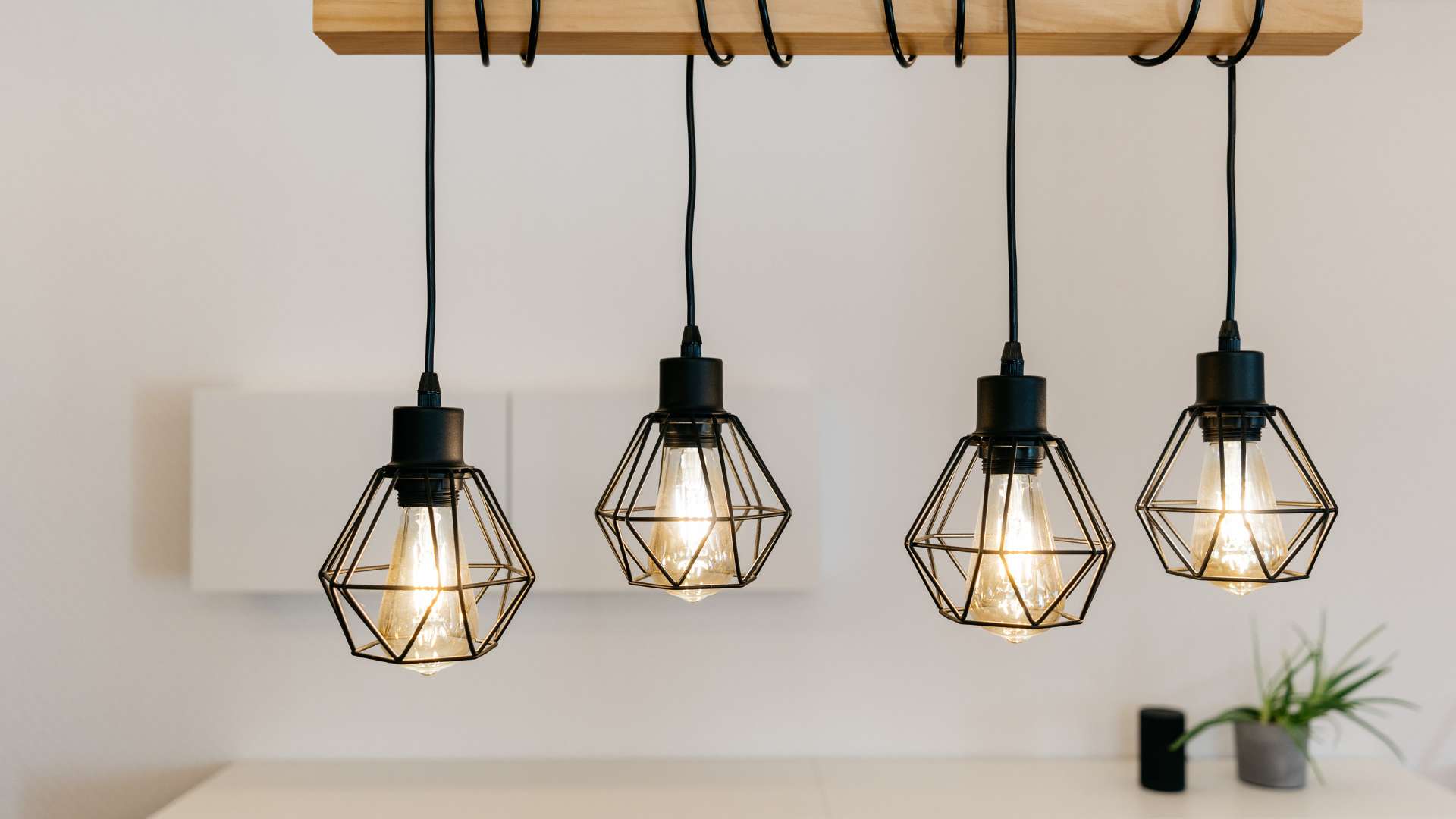
The classic pendant pick used to be the TRÅDFRI LED bulb E27 600 lumen, wireless dimmable, white spectrum, driven from the IKEA Home smart app through the TRÅDFRI gateway. That gateway has since been superseded by the DIRIGERA hub, and in November 2025 IKEA announced a full refresh: 21 Matter-compatible products, among them the KAJPLATS bulb range in eleven variations, which the company itself describes as offering more functionality than the previous TRÅDFRI range. IKEA is explicit that its Matter products need a hub, whether that’s DIRIGERA or one from another brand.
None of that makes an existing TRÅDFRI setup stop working. It does mean that if you’re starting from zero today, buying deep into the older range is buying into a line the manufacturer has already replaced.
| For one pendant | Philips Hue | IKEA |
|---|---|---|
| What you buy first | Bulb plus a Bridge | Bulb plus a DIRIGERA hub |
| Range status in 2026 | Current, with a new Bridge Pro since September 2025 | TRÅDFRI superseded by KAJPLATS |
| Physical fitting | E27, same as any pendant kit | E27, same as any pendant kit |
| Best reason to pick it | You already own, or plan to own, several lights | Cost, and you’re happy on the newer range |
The mistake that ruins every smart pendant
A smart bulb needs permanent power, which puts it in direct conflict with the wall switch everybody in the house has used for years.
Flip that switch off and the bulb is not dimmed or asleep, it is unplugged. No app, no voice command, no schedule. Two evenings of that and somebody in the household will declare the whole thing rubbish. The fix is to stop using the wall switch: tape it, leave it permanently on, and put a battery remote or a dimmer switch where the hand naturally goes. Both brands sell one for the price of a couple of coffees, and it is not an optional accessory. It’s the difference between a smart light and a light that annoys everyone.
Questions people ask me once the shade is up
Can I make a pendant light without any electrical work at all?
Yes, with a plug-in cord set hooked over a ceiling hook and run down to a socket. It’s the standard solution for renters, it’s completely reversible, and it sidesteps the ceiling question entirely. Fix the hook into something solid, keep the cable clear of walkways, and accept that a visible cable is part of the look.
Do I really need the hub for a single bulb?
For one bulb you can get by without one on either side, using Bluetooth or a paired remote, and it works fine as long as you’re standing in the room. What you lose is schedules, remote access and reliability at a distance. If the pendant is the only smart light you’ll ever own, skip the hub. If it’s the first of several, buy it now.
Will a smart bulb work with my old dimmer switch?
No, and it’s the second most common failure after the wall switch. A traditional dimmer chops the mains supply, which a smart bulb reads as flickering power rather than an instruction. Replace the dimmer with a plain switch left permanently on, and dim from the app or the remote instead.
How bright should a pendant over a table be?
Around 600 lumens does the job for a shade hanging low over a table, which is exactly why that figure shows up on so many bulb boxes. Go higher if the shade is dense or the drop is long, and pay attention to colour temperature: anything above 3000 K over a dinner table makes the food look like it’s in a pharmacy.
Fancy making the shade yourself too?
The best pendants I’ve hung started life as something else entirely, at a fraction of the price.