
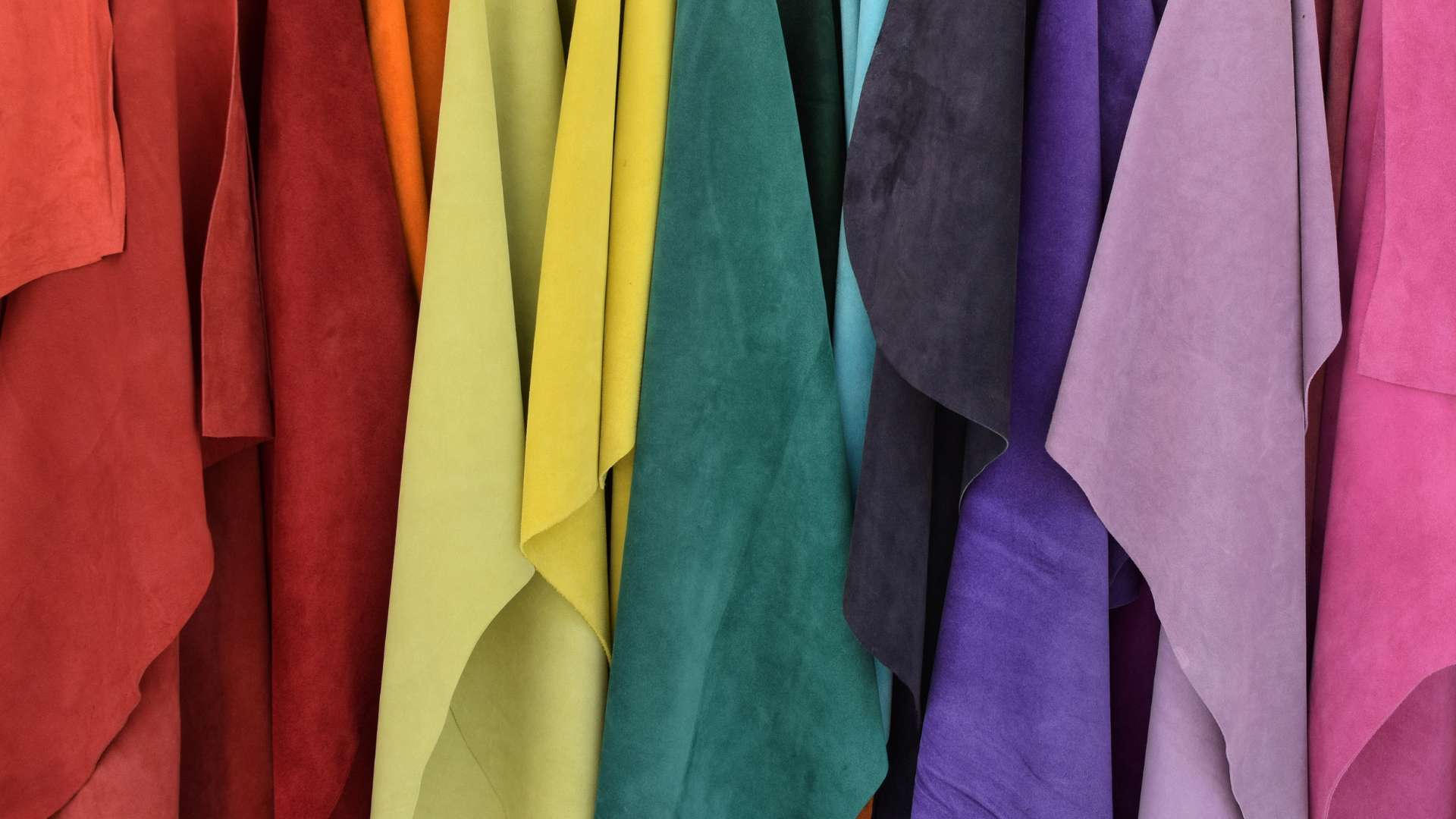
Two curtain panels, one dye bath, the same afternoon. One came out the deep olive I’d been picturing for months. The other came out streaked and half-hearted, and the reason was printed on a label I hadn’t bothered to read.
In brief
- Check the fibre label first. It eliminates one of the two brands for you.
- Dylon gives the deepest, most permanent result on cotton, linen and viscose.
- Rit All-Purpose covers more fibres; Rit DyeMore exists for synthetics.
- Salt, temperature and rinsing time are part of the recipe, not optional.
Same shelf in the shop, completely different chemistry
The two products sit side by side and cost roughly the same, which makes it easy to assume they’re interchangeable. They aren’t, and the difference is worth two minutes of your time before you ruin anything.
A fibre-reactive dye reacts with the cellulose in plant fibres and becomes part of the fabric. That’s the Dylon Permanent Fabric Dye family. It needs an alkaline environment to do it, which is why soda ash comes already mixed into the sachet, and it needs salt in the water to push the dye out of solution and towards the fibre. Get those two right and the colour is genuinely permanent rather than merely stubborn.
A union dye is a different idea entirely. Rit All-Purpose contains more than one dye class in the same box, so whichever fibre you drop in, something in the mix will take. That’s a clever piece of formulation and it’s why Rit has survived on shelves since 1916. The trade-off is honest and well known: the colour is generally less intense and less wash-fast than a fibre-reactive result on the same cotton.
Read the label, then pick the box
Almost every disappointing home dye job I’ve seen comes down to a mismatch between the fibre and the dye class. This is the shortcut I keep in my head at the counter.
| What the label says | Dylon Permanent | Rit All-Purpose | Rit DyeMore |
|---|---|---|---|
| 100% cotton, linen, viscose | Ideal, full depth | Works, softer result | Not the right tool |
| Wool, silk | Lighter shade only | Yes, this is its territory | No |
| Nylon | Not suitable | Yes | Yes |
| Polyester, acrylic | Not suitable | No | Yes, this is what it’s for |
| Blend, over 35% synthetic | Pale, patchy | Pale, patchy | Yes, the maker’s own threshold |
| Stain-resistant or coated finish | Unpredictable | Unpredictable | Unpredictable |
That last line matters more than people expect. A special finish is a barrier, and no dye argues with a barrier. Terrace cushions and outdoor fabrics are very often treated, and they’re exactly the pieces the coastal sun fades first, so they’re exactly the pieces you’ll be tempted to rescue.
Two brands, two eras, two attitudes
Knowing where each one came from explains a lot about how they behave.
Dylon is British, founded in 1946, and the brand now belongs to Henkel, which took it on through its purchase of the Spotless Group in 2014. It has always been built around home use in a bucket or a washing machine drum, with the chemistry pre-portioned so you can’t easily get the ratios wrong.
Rit is American and older still, first sold in 1916 when the United States was cut off from German dye supplies. The brand went through the bankruptcy of its former owner Phoenix Brands and is now owned by Nakoma Products. Its whole selling point has stayed the same for a century: one box, almost any fibre, no chemistry homework.
Where a home dye job actually goes wrong
Assuming you’ve matched the dye class to the fibre, five things account for nearly every bad result.
- Not enough room in the bath. Fabric that can’t move gets banded and creased colour. Use a bigger container than feels sensible.
- Skipping the salt. The pack calls for it because it drives dye into the fibre. Dylon’s sachet instructions specify a generous quantity, around 250 g for a standard pack, and halving it halves your depth of shade.
- Dyeing a garment that was never really clean. Old fabric softener, or sun cream worked into a beach towel over a season, blocks uptake in patches.
- Stopping the stirring too early. The first ten to fifteen minutes are when evenness is decided. Walk away then and you’ll see it forever.
- Under-rinsing. Rinse until the water runs properly clear, then wash separately. Unfixed dye that leaves later is what stains everything else in the drum.
One more that’s specific to this part of the world: our tap water is hard. Very hard water can interfere with dye uptake, and if your kettle furs up in a fortnight, that’s your clue to dye in softened or filtered water rather than straight from the tap.
Safety, and what goes down the drain
Fabric dyes sold in the EU fall under the REACH regulation, so the hazard information on the box is real information, not packaging decoration. Read it before you pour, and treat it the same way you’d treat any household chemical.
Practically: work in a ventilated room, wear gloves, and keep dye out of the pans and utensils you cook with, especially if you’re using a stove-top method. A dedicated old stockpot from a brocante costs almost nothing and settles the question permanently. Domestic quantities of household dye are designed to go down a normal drain, but there’s no reason to send more than you have to, so rinse into the sink rather than onto the terrace where it can reach a storm drain.
Things people ask me about dyeing at home
Can I mix a Dylon colour with a Rit colour?
Don’t. They belong to different dye classes with different fixing conditions, and blending them means neither set of instructions applies. If you want a custom shade, mix within one brand’s own range, where the chemistry is consistent.
Will dyeing shrink or weaken the fabric?
The dye itself doesn’t weaken the fibre, but hot water does what hot water always does. Anything that would shrink in a hot wash will shrink in a hot dye bath, so pre-wash first and accept the shrinkage before you commit to a colour.
Can I dye something that’s already coloured?
Only downwards. Dye is transparent, so it adds to what’s there rather than replacing it. Blue over yellow gives green, and nothing goes lighter than it started. For a real change of direction you need a colour remover first, and Rit sells one as a separate product.
Is the machine method better than the bucket?
It’s more even on large items, because the drum keeps everything moving for the full cycle, and that’s the single hardest thing to reproduce by hand with curtains or a bedspread. For a cushion cover or a small piece of cotton, a bucket is perfectly good, and if you’re making the covers yourself from raw fabric, my step-by-step on sewing a cushion cover in a few simple steps pairs neatly with a dye bath done before assembly.
How long before I can wash it normally?
Wash it alone for the first two or three cycles at a low temperature, then treat it as any other coloured textile. Line-dry it out of direct sun for the first few weeks: a strong summer sun here fades a fresh dye faster than any washing machine will.
Got fabric left over?
A dyed offcut is exactly what a headboard project needs, and it costs next to nothing.