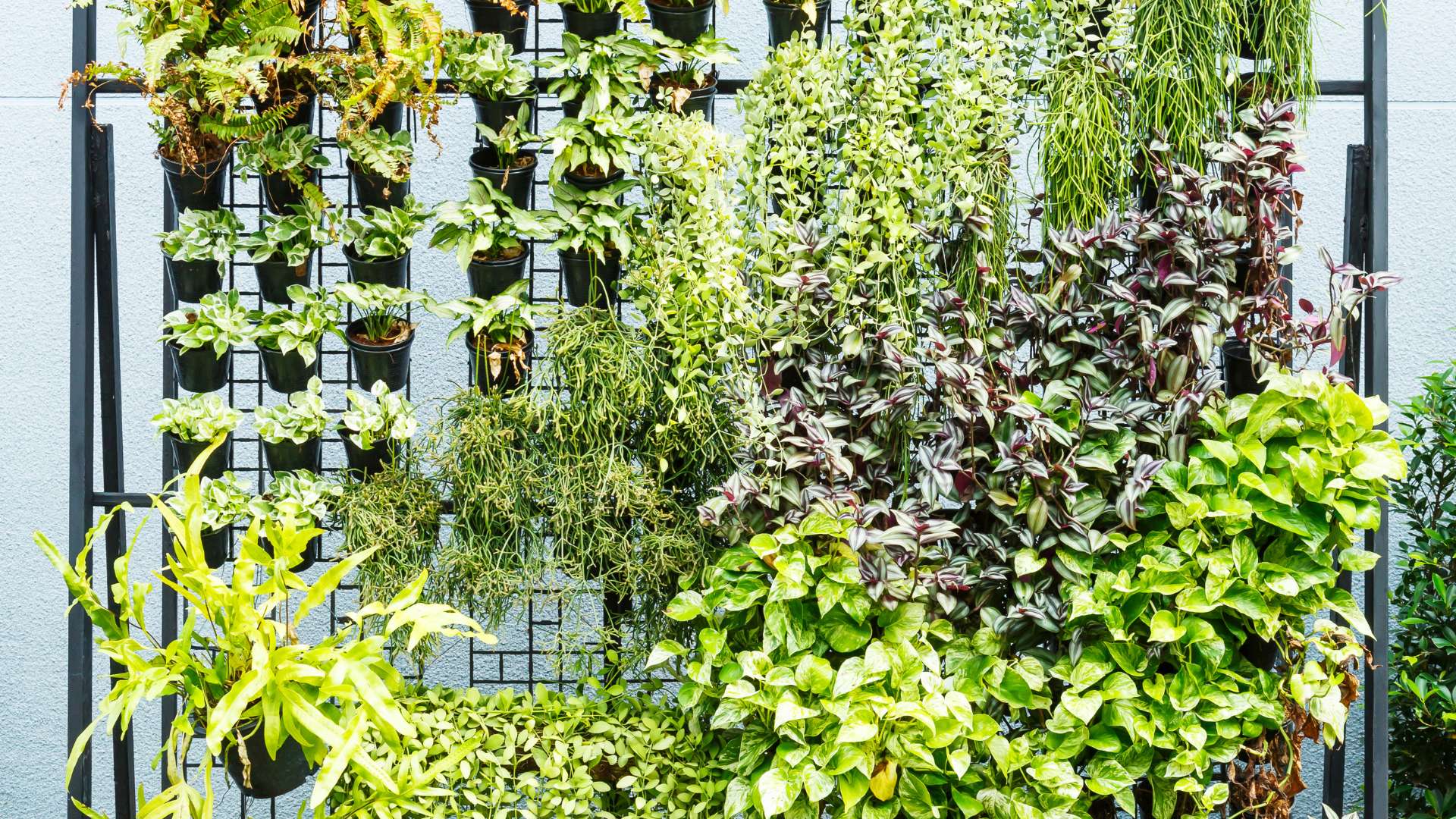
Everybody’s first vertical garden dies the same way. The plants at the bottom drown, the plants at the top go crisp, and the owner concludes they have no green fingers. It isn’t the fingers. It’s physics, and it has a fix.
In brief
- Reduce mains pressure before the drippers. Nothing works without this.
- Pressure-compensating heads even out top and bottom rows.
- Fittings aren’t cross-compatible. Commit to one range and stay in it.
- Local drought orders can ban daytime watering. Check before you set a timer.
Why a vertical garden isn’t just a flat one turned sideways
Three things change the moment your beds go up a wall, and all three are worse in a Mediterranean summer.
Height eats pressure. Every metre of climb costs you flow at the top. On a two-metre panel the difference between the top row and the bottom row is enough to see in the plants within a fortnight.
Volume is tiny. Wall pockets and modular planters hold very little compost, so there’s no buffer. A conventional garden forgives a missed day; a vertical one doesn’t, particularly on a south-facing wall that stores heat all afternoon and radiates it back at the roots.
Gravity keeps working after the tap stops. Water drains down through the structure and collects at the bottom, so the lower plants sit wet while the top ones dry. That’s the exact pattern people mistake for a watering mistake, when it’s a design one.
The four parts that make it work
Whichever brand you buy, the shopping list has the same shape, and skipping any one of the four is what causes the failures above.
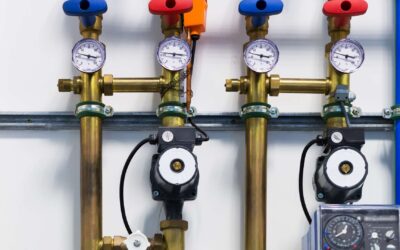
- A pressure reducer with a filter. Micro systems run at a fraction of mains pressure. Gardena’s Master Unit 1000, the starting component of its Micro-Drip-System, brings the incoming pressure down to around 1.5 bar and filters out the particles that would otherwise block the drippers.
- Pressure-compensating drippers. Gardena makes an inline drip head described as pressure-equalising, specifically for rows of plants at different heights. That’s this problem, named on the packaging.
- A timer. Little and often beats one long soak on a wall, because the compost volume is too small to hold a big dose.
- A collection tray at the base. Runoff has to go somewhere, and on a terrace that somewhere is either a tray or your neighbour’s balcony.
Two brands, two national habits
Both have been at this for over sixty years, and both came to irrigation from a slightly different direction.
Gardena was founded in Ulm in 1961 by Werner Kress and Eberhard Kastner, and has belonged to the Swedish Husqvarna Group since 2007. The house style is systems thinking: components that click together, catalogues built as ecosystems, and the Micro-Drip range as a modular kit you extend rather than replace. Gardena states that this kind of drip system can cut water use by up to 70% compared with conventional watering, which in a region under summer restriction is the number that matters most.
Hozelock started in 1959 on a former airfield at Haddenham, with what it describes as the world’s first plastic hose connector, the Hoze-Lock that gave the company its name. It’s headquartered in Birmingham, says more than 75% of its products are made in Britain, and has been part of the French group Exel Industries since October 2012. The style is more pragmatic and connector-led, and the hose-end kit tends to be where it’s strongest.
Choosing between them without regretting it

The honest comparison isn’t feature by feature, because both cover the basics. It’s about the consequences of committing to one range.
| What to weigh | Gardena | Hozelock |
|---|---|---|
| Origin | Ulm, Germany, 1961 | Haddenham, UK, 1959 |
| Group | Husqvarna since 2007 | Exel Industries since 2012 |
| Design approach | Modular system, extend over years | Connector-led, quick to assemble |
| Vertical planting | Pressure-equalising inline heads available | Check the specific kit for compensation |
| Long-term risk | Locked into one fitting standard | Locked into one fitting standard |
| Decider | What your nearest shop restocks | What your nearest shop restocks |
I’m serious about that last row. Micro-irrigation fittings are proprietary, the pipe diameters differ, and a broken connector on a Sunday in August is only a problem if the replacement is forty minutes away. Buy the range you can walk in and buy a single part of.
The rule that overrides your timer
Before you programme anything, check what the préfecture says. In the Alpes-Maritimes, prefectural drought orders published through the summer of 2026 placed dozens of communes under restriction, and the standard measure prohibits watering gardens, green spaces and vegetable plots between 8am and 8pm. Levels and lists of communes change through the season, and the national VigiEau platform is where you check what applies to your own address today.
This is less painful than it sounds for a vertical garden, because early morning was always the right time anyway. Watering at dawn puts water into the compost before the sun can take it back, and it leaves the foliage dry going into the day, which is how you avoid the fungal problems that follow evening watering in humid coastal air.
Two habits reduce the volume you need in the first place: mulch the top of each pocket, even a thin layer, and group plants by thirst rather than by looks. A wall where the drought-tolerant herbs share a circuit with ferns is a wall where one of the two is always unhappy. The same zoning logic applies to a garden on the ground, and I went through it properly in my piece on designing a landscape from scratch.
Three things worth settling before you buy
Do I need a tap, or can I use a reservoir?
Both brands assume mains pressure. Running a micro system from a rainwater butt usually needs a small pump, since gravity alone rarely delivers enough for drippers to work as designed. Check the minimum operating pressure on the kit before you count on a barrel.
What maintenance does it really need?
Rinse the filter, and check individual drippers when a plant looks off. Hard water in this region scales up small orifices, which is the single most common cause of one pocket dying while its neighbours thrive. A blocked dripper looks exactly like a sick plant until you put a finger under it.
What happens over winter?
Frost is rare on the coast but not unknown a few kilometres inland. Drain the pipework, bring the timer and any battery unit indoors, and store the pressure reducer somewhere dry. It’s twenty minutes in November against replacing split fittings in April.
Green wall done, terrace still tired?
The colour of what’s behind the plants changes how the whole thing reads.