
IKEA reckoned in 2023 that a Billy bookcase leaves a shop somewhere in the world every five seconds, and that more than 140 million of them have been sold. Put a Lerberg next to one of those and you’re not comparing two bookcases. You’re comparing a box with a frame.
In brief
- Billy takes modification. Lerberg’s coated steel really doesn’t.
- Billy’s shelves move; Lerberg’s heights are fixed.
- Since 2023, Billy’s wood veneer sides have become printed paper foil.
- Both must be anchored to the wall. This is the non-negotiable part.
They were never really competing
Two IKEA products in the same aisle look like alternatives, but these two solve different problems in a room.
Billy arrived in 1979, designed by Gillis Lundgren, IKEA’s fourth-ever employee, who also gave the company its flat-pack habit. The brief was ordinary and it has aged extremely well: shelves for books, adjustable, cheap, and neutral enough to disappear into any room. That neutrality is what made it the most hacked piece of furniture on the planet.
Lerberg is a different intention altogether, a shelf unit in steel by Jon Karlsson, sold in a small range of sizes around 148 cm tall and 35 or 60 cm wide, with a lower 70 cm version. It reads as almost nothing in a room, which is its entire purpose. In a small flat where a full-height board bookcase would close a wall down, that visual lightness is worth more than storage volume.
Billy, and what the 2023 change actually means
What it’s made of
The carcass is particleboard with a fibreboard back panel, finished in a surface layer rather than solid timber. The shelves sit on pegs in pre-drilled holes, which is why the spacing is adjustable and why you can genuinely fit tall art books next to paperbacks in the same unit.
In 2023 IKEA began replacing the wood veneer on the sides with a printed paper foil. It’s worth knowing before you plan a project, because the two behave differently under a sander and under paint. Veneer is a thin layer of real wood you can key up; foil is a printed film, and paint needs a proper adhesion primer to stay on it.
Where the hacks pay off
The reason people build with Billy rather than buy something nicer is that it accepts carpentry.
- Built-in treatment. Two or three units side by side, a plinth underneath, cornice and filler strips scribed to the wall, and it stops looking like flat-pack. This is the hack with the biggest visual return and the most cutting.
- Doors and backs. Adding doors turns open shelving into storage, and swapping the thin back panel for something rigid, or wallpapering it, changes the whole character of the unit.
- Colour. Painting is straightforward on the foil or veneer once primed, and it’s the cheapest way to make two identical units read as bespoke joinery.
Old buildings along the coast rarely have square corners or flat walls, so the filler strip is the piece of the built-in hack I’d never skip. It’s what absorbs the gap that a plumb-level unit leaves against a wall that hasn’t been plumb since 1890.
Lerberg, and why you leave it alone
The frame is steel with an epoxy and polyester powder coating. That coating is the reason it wipes clean, survives a bathroom or a covered terrace better than board does, and shrugs off the humidity that makes particleboard swell at the edges.
It’s also the reason most Lerberg hacks are bad ideas. Drilling breaks the coating and opens a path to rust, which near the sea is not a theoretical risk. Spray painting it means degreasing, a metal primer and patience, for a result that will chip at every contact point. The modifications that do work leave the metal intact: setting a timber or bamboo board on the shelf for warmth, standing two units side by side to widen the run, or using the lower model as a plant stand where the open sides actually help.
The trade-off you accept is fixed shelf heights. Nothing taller than the gap goes in, and no amount of goodwill changes that. If your books are mostly large format, this unit will annoy you every day.
The part nobody is allowed to skip
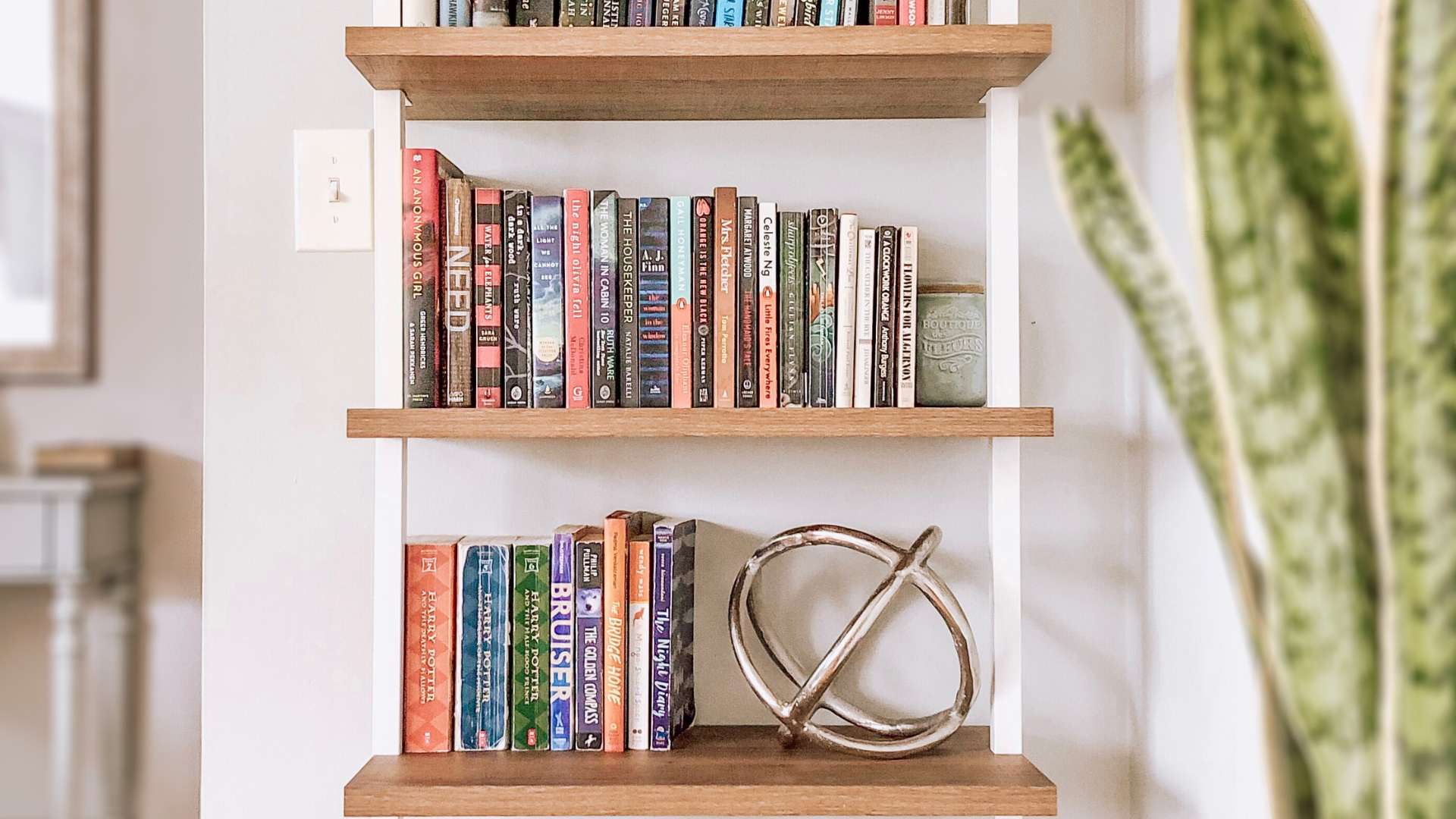
IKEA supplies a wall-attachment device with the furniture that needs one, and states plainly that the bookcase must be secured to the wall with it, using screws and plugs suited to your own wall. That last clause is the one people miss: the fixings in the box are not universal, because IKEA has no idea what your wall is made of.
In a modern flat with plasterboard partitions, that means proper hollow-wall anchors or, better, hitting the metal stud behind. In an old stone or brick building, it means a masonry bit, a hammer drill and the right plug. A tall unit loaded with books is a serious weight, and the danger isn’t the unit sliding, it’s a child pulling on a shelf and the whole thing coming forward.
Two more habits worth keeping. Load the heavy things low, which lowers the centre of gravity and takes the sag out of the upper shelves. And if you’re combining units, or stacking an extension on top, fix each one independently rather than trusting them to hold each other up.
Side by side, honestly
| Billy | Lerberg | |
|---|---|---|
| Material | Particleboard, foil or veneer finish | Powder-coated steel |
| Shelf heights | Adjustable on pegs | Fixed |
| Visual weight | Solid, closes a wall | Light, sees through |
| Takes modification | Yes, cut, paint, add doors | Barely, and drilling invites rust |
| Damp rooms and terraces | Poor, edges swell | Much better tolerated |
| Best used as | The base of a built-in library | A discreet unit in a small room |
Can you combine the two in one project? Technically yes, and people do use steel frames as end supports for board shelving. Honestly, though, mixing them usually means extra brackets, extra hardware and a structure that’s less stable than either unit was on its own. Pick the one that matches the job and put the effort into the finish instead.
If the built-in route appeals but you’d rather cut your own carcass than modify a bought one, the principles are the same and the cost is often lower. I set out the whole sequence in my guide to building a wooden piece of furniture yourself, and the wall fixing rules above apply exactly the same way to something you’ve made.
If you remember one thing from all of this, make it the material. Billy is a board product that wants to be worked on, Lerberg is a metal product that wants to be left as it is, and every satisfying version of either project starts from accepting that.
Rather build than buy?
Reclaimed timber and a couple of brackets do the same job with a lot more character.