
I lined up a tin of Liberon wax and a tin of V33 varnish on the workbench to settle which brand was better, turned them both round, and found the same group’s name printed on the back of each.
In brief
- Liberon and V33 are both brands of the same French group.
- Choose by finish type first: wax, oil or varnish.
- Every tin must state its VOC content by law, and it’s worth reading.
- Oil-soaked rags are a genuine fire risk. Don’t screw them into a ball.
Two names, one family
The V33 Group markets both V33 and Libéron to home users, alongside professional ranges sold under other names. That explains something I found confusing for years: why two supposedly competing brands never quite compete on the same shelf. They’re aimed at different hands.
Liberon’s roots go back to Georges Libéron in Paris in the early twentieth century, and the brand built its reputation supplying cabinetmakers and antique restorers. The one everybody knows, Black Bison paste wax, arrived in the 1950s as furniture care moved from the workshop into ordinary homes, and it’s been a benchmark ever since.
V33 came from a different direction entirely. The name is a product spec that stuck: the company’s first floor varnish, launched from Domblans in the Jura in 1957, was sold on being 33% as hard as glass. Everything about the range still points that way, towards surfaces that get walked on, wiped down and knocked about.
Neither history makes one better. It makes them good at different things, and it explains why a French polish sits under one label and a scratch-resistant water-based varnish under the other.
Start with the finish, not the brand
Three families of product cover almost every restoration job, and picking the wrong one is what makes people conclude a brand is bad.
Wax, for pieces that will be admired more than used
Paste wax sits on the surface, deepens the grain and gives that soft, hand-rubbed glow you can’t fake. It’s forgiving to apply and easy to refresh. One correction to something you’ll read everywhere: these waxes are rarely purely natural. A paste wax is typically a blend, carnauba and beeswax among others, carried in mineral spirits so it spreads. It’s a fine product, just not a jar of honey.
Wax also offers the least protection of the three. A waxed tabletop will mark from a wet glass. Choose it for a chest of drawers, a headboard, a display piece.
Oil, for wood you want to keep feeling like wood
Oil penetrates instead of coating, so the surface keeps its texture and repairs beautifully: you re-oil the worn patch rather than stripping the whole piece. It suits oak and other open-grained hardwoods, and it’s the sensible answer for anything that lives on a terrace, where a film finish would eventually lift and peel under the sun.
Varnish, for surfaces that take a beating
A varnish forms a film. Modern water-based versions dry fast, hold their colour, resist scratches and stains, and release far less solvent into your workshop than the old oil-based ones. This is where V33’s range earns its keep, and it’s what I’d use on a desk, a kitchen shelf or a child’s furniture.
| Finish | Protection | Repairing a worn patch | Best on |
|---|---|---|---|
| Paste wax | Low | Buff and re-wax, minutes | Antiques, low-traffic furniture |
| Penetrating oil | Medium | Spot re-oil, no stripping | Oak, outdoor and terrace wood |
| Water-based varnish | High | Sand back the whole panel | Desks, shelves, daily-use tops |
| French polish (shellac) | Medium, gloss | Skilled work only | Fine and antique furniture |
Read the small print on the tin
Every pot of paint or varnish sold in the EU has to declare its VOC content, and once you know how to read that line it tells you a lot. Under Directive 2004/42/EC, the label states the product subcategory, the legal limit in grams per litre for that subcategory, and the actual maximum content of the product ready for use. Interior and exterior trim varnishes and stains, for example, are capped at 130 g/l for water-based products against 400 g/l for solvent-based ones.
That gap is the whole argument for water-based finishes in a flat. Fewer solvents in the air means less ventilating, less headache and a shorter wait before you can put the room back to normal. The V33 Group states that its products have carried the European Ecolabel since 2000, which is worth checking pot by pot rather than assuming across a whole range. And as with any chemical product sold here, the composition sits under the REACH regulation, so the safety information on the label isn’t decorative.
Application, in the order that matters
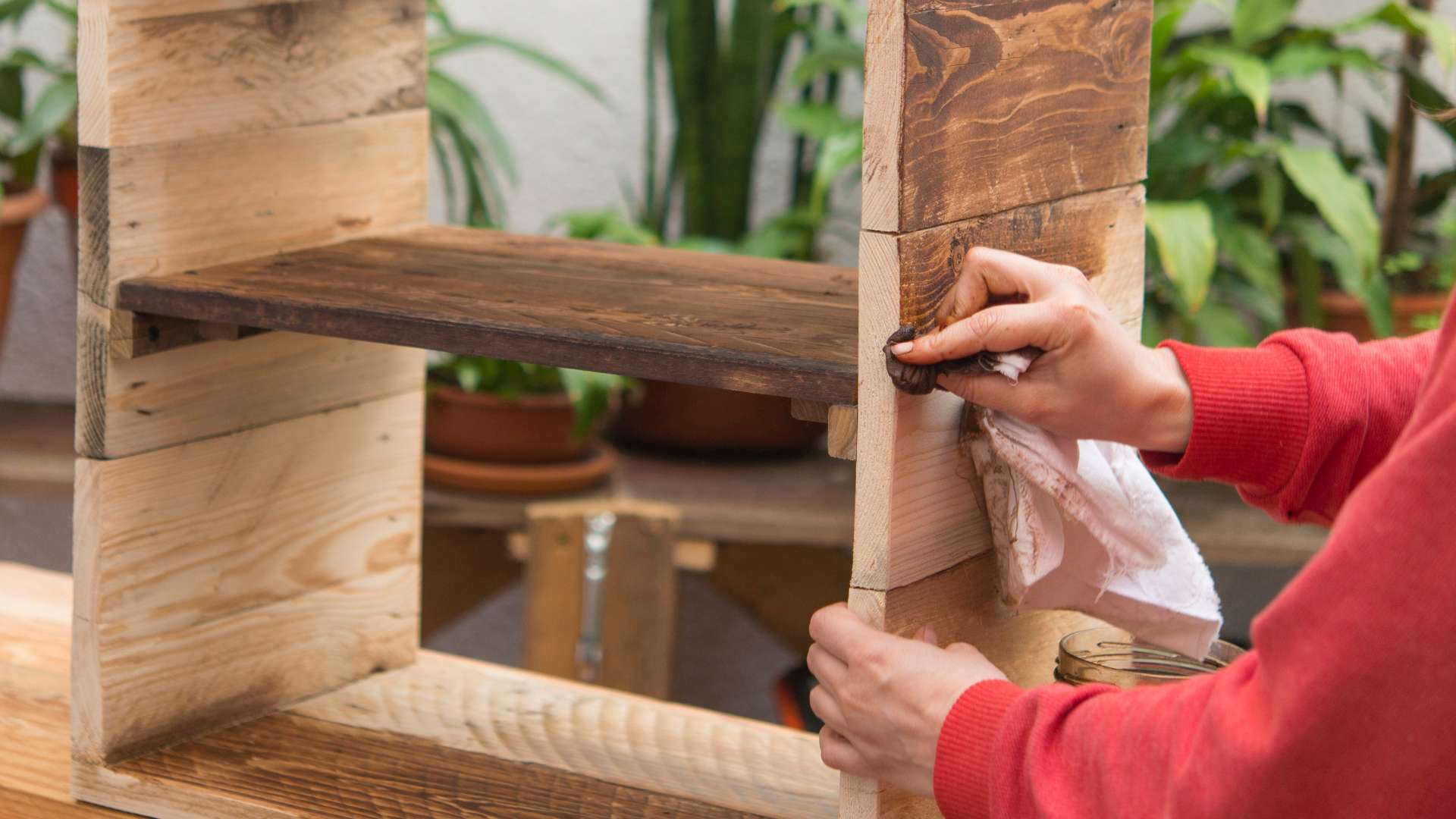
The product matters less than what you do with it. This is the sequence I stick to, and skipping any of it shows.
- Strip or clean back properly. Old wax under a new varnish will stop it keying, and no amount of extra coats fixes that.
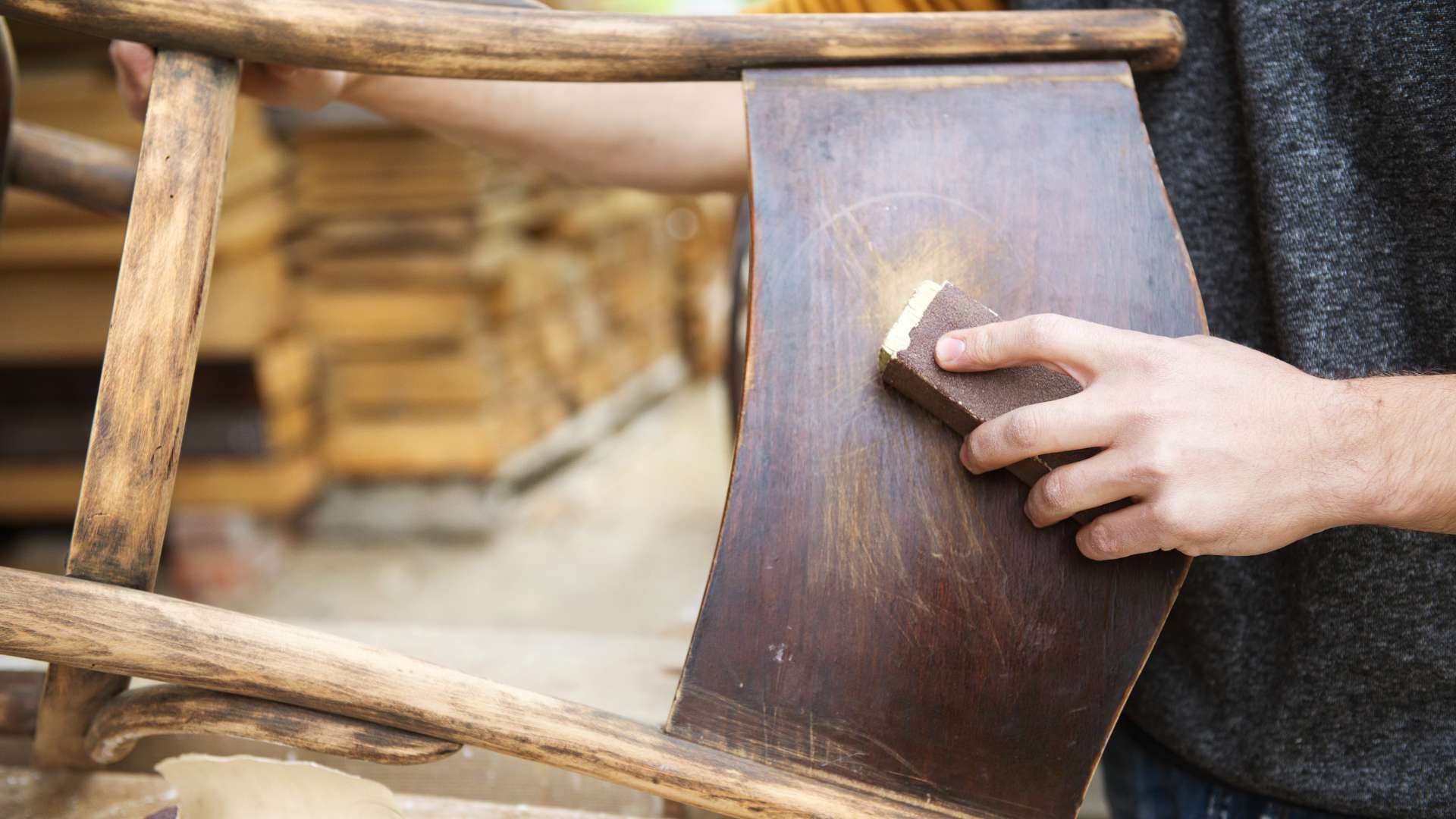
- Sand through the grits in order, always along the grain, finishing finer than you think you need. Then dust off with a slightly damp cloth, not a dry one that just moves it around.
- Test on the underside. Every wood takes colour differently, and the shade on the tin lid is a suggestion, not a promise.
- Thin coats, fully dry between them. Near the coast, humidity stretches drying times well beyond what the tin quotes. Give it longer.
- Leave it to cure before use. Touch dry is not the same as hardened. A week of patience saves a fingerprint set into the finish for good.
If you’re finishing something you built rather than something you rescued, the prep changes slightly, and my guide to building a wooden piece of furniture yourself covers the stage before this one.
Two safety points I won’t gloss over
Oily rags can catch fire on their own. This isn’t workshop folklore. Cloths soaked in finishing oil generate heat as the oil cures, and a crumpled pile in a bin can reach ignition temperature without any flame near it. Lay them flat outdoors to dry, or drop them in water in a sealed metal tin, then dispose of them properly.
Be careful with old painted pieces. Lead-based paint was in common use well into the twentieth century, which is why France requires a lead diagnostic on housing built before 1949. On an old painted chair or cupboard, don’t dry-sand and don’t heat-strip blind. If the piece is early enough to be a candidate, use a chemical stripper, work outside, wear proper protection, and if you’re unsure, have it checked rather than making dust you’ll be breathing all afternoon.
Questions I get asked
Can I varnish over a waxed piece?
Not without removing the wax first, thoroughly, with white spirit and patience. Varnish won’t bond to wax, and you’ll get a cloudy, peeling mess a fortnight later.
Which brand should I buy for an antique I care about?
Liberon’s restoration range is the one built for that work, and the traditional wax and shellac products are gentle on original patina. If the piece has any real value, talk to a restorer before you touch it at all: patina removed is patina gone.
Is a water-based varnish really tough enough for a tabletop?
Yes. Modern water-based varnishes hold up well against scratches and stains, and they have the advantage of not yellowing over the years the way older oil-based ones do on pale wood.
Got a whole room of tired woodwork?
Same products, bigger surface, and a few tricks that save a weekend.